Cardiff University · School of Computer Science and InformaticsPrifysgol Caerdydd · Ysgol Cyfrifiadureg a Gwybodeg

Computational Robotics GroupGrŵp Roboteg Gyfrifiadurol

We are a robotics research group in the School of Computer Science and Informatics at Cardiff University. Our research addresses how autonomous robots perceive their environment, plan and execute motion, manipulate objects, and operate safely among people — developed and evaluated on real robot platforms.Rydym yn grŵp ymchwil roboteg yn Ysgol Cyfrifiadureg a Gwybodeg ym Mhrifysgol Caerdydd. Mae ein hymchwil yn mynd i'r afael â sut mae robotiaid ymreolaethol yn canfod eu hamgylchedd, yn cynllunio ac yn gweithredu symudiad, yn trin gwrthrychau, ac yn gweithredu'n ddiogel ymhlith pobl — wedi'i ddatblygu a'i werthuso ar lwyfannau robot go iawn.

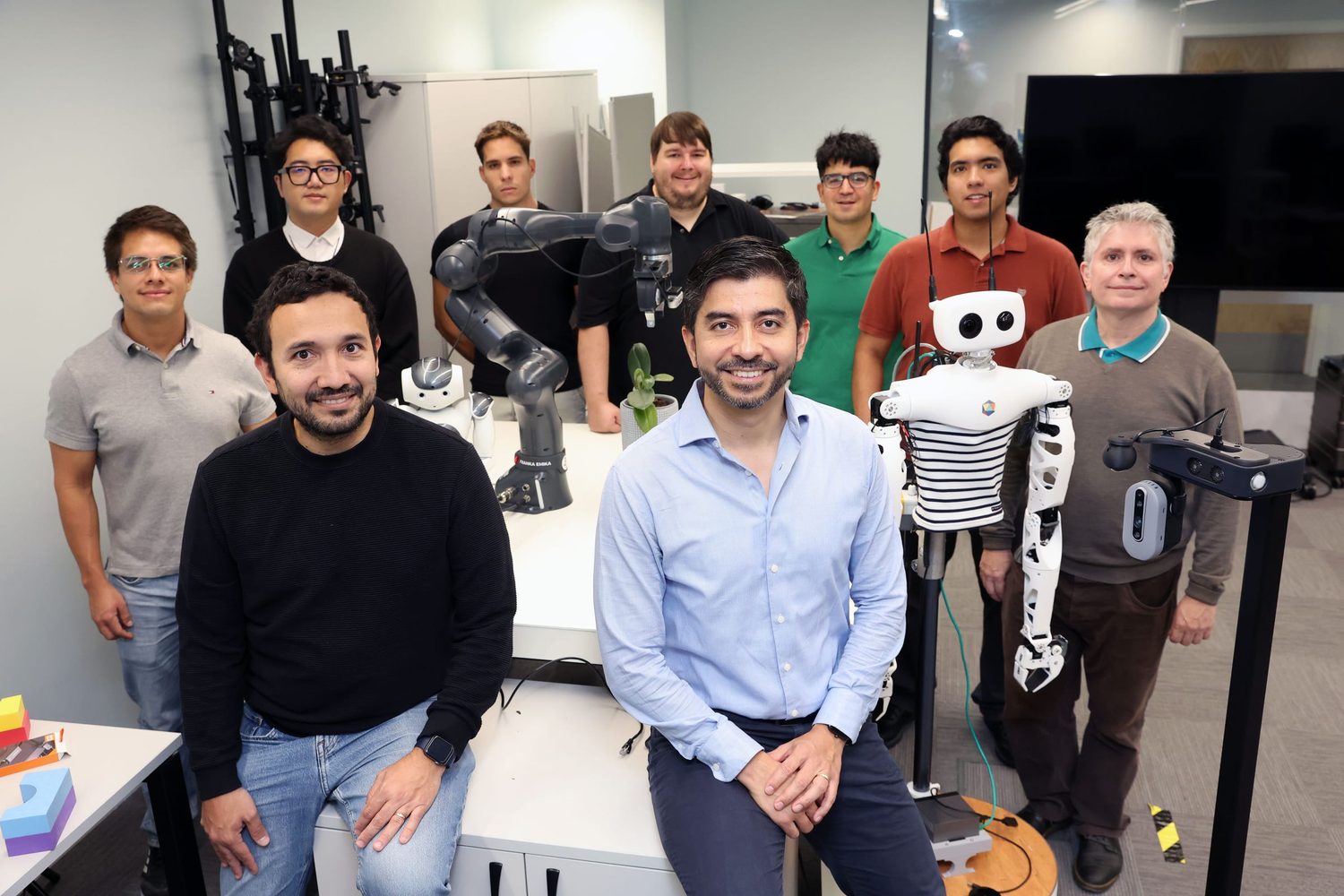
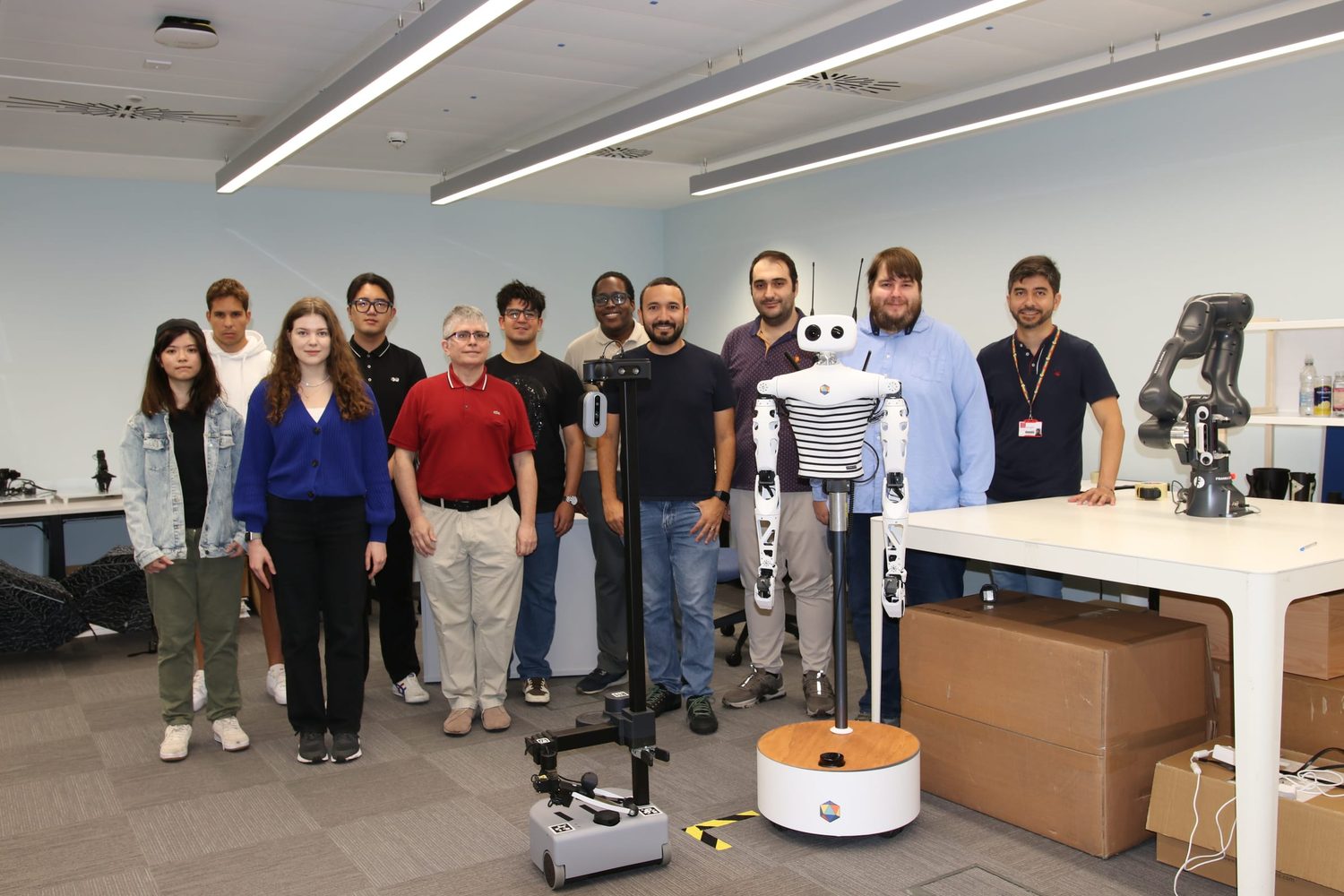
Cardiff University Computational Robotics team group photograph, 2025
The CUCR team, 2025Tîm CUCR, 2025

ResearchYmchwil

Research areasMeysydd ymchwil

The group's work falls into four connected areas.Mae gwaith y grŵp yn perthyn i bedwar maes cysylltiedig.

Task and Motion PlanningCynllunio Tasgau a Symud

Integrating high-level task planning with sampling- and learning-based motion planning for mobile robots and manipulators.Cyfuno cynllunio tasgau lefel-uchel â chynllunio symud ar sail samplu a dysgu ar gyfer robotiaid symudol a thrinwyr.

Perception & AICanfyddiad a Deallusrwydd Artiffisial

Robot perception, 3D world representation, and embodied AI that let autonomous systems understand real, dynamic environments.Canfyddiad robotiaid, cynrychioli'r byd mewn 3D, a deallusrwydd artiffisial ymgorfforedig sy'n galluogi systemau ymreolaethol i ddeall amgylcheddau go iawn.

Human-Robot CollaborationCydweithio Rhwng Dynol a Robot

Social robot navigation, shared autonomy, supervisory control, and immersive teleoperation interfaces.Llywio robotiaid cymdeithasol, ymreolaeth a rennir, rheolaeth oruchwyliol, a rhyngwynebau teleweithredu trochol.

Robot ManipulationTrin Robotig

Object manipulation and reconstruction for long-horizon tasks in constrained, cluttered workspaces.Trin ac ailadeiladu gwrthrychau ar gyfer tasgau hirdymor mewn gweithleoedd cyfyng, llawn dop.

PublicationsCyhoeddiadau

Recent publicationsCyhoeddiadau diweddar

The three most recent papers from the group.Y tri phapur diweddaraf gan y grŵp.

2026 IEEE Access

Lazy Evaluation of Multi-Grasp Goals Guided by Motion Planning in Pick-and-Place Object Manipulation

F. Duman, E. S. Tok, J. D. Hernández

This work integrates grasp planning and motion planning to jointly solve pick-and-place tasks in cluttered environments, where treating them separately often yields grasp poses the robot cannot reach. Grasp affordances are represented as continuous workspace goal regions that approximate the goal regions defined in configuration space, turning the task into an extended start-to-goal motion planning problem solved with a sampling-based tree planner. Simulated and real-world Franka Emika experiments show improved grasping accuracy and higher manipulation success rates.

2026 Towards Autonomous Robotic Systems To appear

Learning-based Object Center Adjustment for 3D Reconstruction using an Eye-in-Hand Robotic Manipulator

J. J. Patiño, F. Duman, V. Romero-Cano, Y. Lai, J. D. Hernández

This paper presents a robotic object reconstruction approach using an eye-in-hand fixed-base manipulator under non-optimal reachability conditions. A partial reconstruction from initially reachable views guides an ML-based strategy to determine object displacements that maximize reachable viewpoints. Simulation and real-world experiments demonstrate improved reconstruction quality, achieving greater surface coverage and area compared with systems without object displacement adjustment.

2026 2026 IEEE 22nd International Conference on Automation Science and Engineering (CASE)

Learning-Informed Motion Planning Toward Workspace Goal Regions for Object Manipulation in Constrained Environments

F. Duman, J. J. Patiño, V. Romero-Cano, J. D. Hernández

This work treats pick-and-place manipulation as start-to-goal-region motion planning, where valid grasps and placements define multiple workspace goals. It introduces a transformer-guided sampling-based tree planner that uses start and goal configurations plus visual observations to improve planning in constrained shelf environments. Simulated and real-world Franka Emika tests show faster planning, higher success rates, and effective transfer from simulation to robot execution.

All publicationsPob cyhoeddiad →

ContactCysylltu

PhD applications, collaboration, and visitsCeisiadau PhD, cydweithio, ac ymweliadau

Enquiries from prospective PhD students and from academic or industry partners are welcome. The lab is not open to the public; if you would like to visit, please contact us in advance.Croesewir ymholiadau gan ddarpar fyfyrwyr PhD a chan bartneriaid academaidd neu ddiwydiannol. Nid yw'r labordy ar agor i'r cyhoedd; os hoffech ymweld, cysylltwch â ni ymlaen llaw.